Orange Flowers Wreath: A Joyful, Real-World Embroidery Review
First Impressions: Abstract Joy, Not Just Another Floral
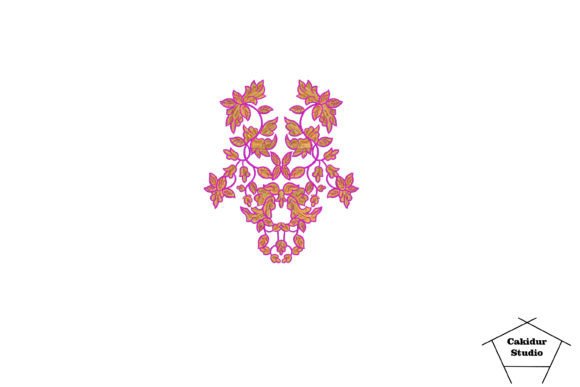
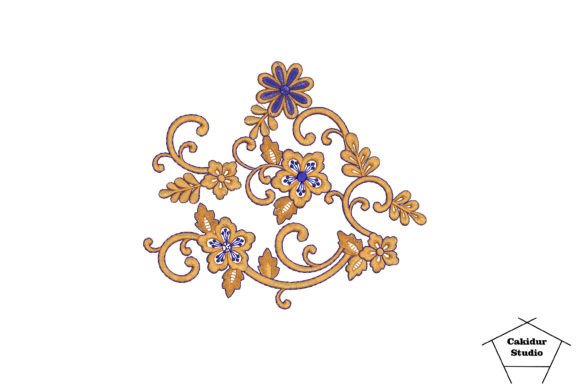
When I opened the Orange Flowers Wreath embroidery file, I didn’t see a stiff botanical diagram—I saw movement. It’s an abstract floral and artistic ornament with a joyful heart, as the description says—and that’s accurate. The shape feels balanced but not symmetrical; it breathes. Petals curve outward like they’re catching sunlight, and the central cluster has just enough variation in scale to avoid repetition fatigue. This isn’t a botanical study—it’s a mood piece. That makes it unusually versatile for a floral wreath design.
Real Project Test: Custom Tote Bags for a Local Bakery
Last week, I stitched Orange Flowers Wreath onto two organic cotton tote bags—one for a weekend farmers’ market pop-up, the other for a small-batch bakery’s holiday gift set. I used medium-weight cutaway stabilizer and 40-weight rayon thread in warm tangerine, burnt sienna, and cream. On the natural canvas, the design popped without shouting. Customers paused mid-aisle—not because it was flashy, but because it felt handmade *and* intentional. One woman asked if it was hand-drawn first. (It wasn’t—but the flow of the satin stitch lines and gentle fill transitions made it feel that way.)
Where It Shines: Context Is Everything
- Custom apparel: Works beautifully on sweatshirt cuffs, back yokes, or chest pockets—especially on heathered or oatmeal fabrics where orange reads rich, not neon.
- Baby embroidery: Softened with matte cotton thread and light tear-away stabilizer, it adds warmth to crib blankets or onesie hems without overwhelming delicate scale.
- Embroidered patch: Clean outer edge and moderate density make it ideal for iron-on or sew-on patches—no fraying corners or thread nests at petal tips.
- Kitchen textiles: On linen tea towels or aprons, it reads as cheerful but grounded—not saccharine. Perfect for small shop product lines aiming for “thoughtful handmade,” not mass-produced charm.
- Holiday & wedding gifts: Paired with subtle gold thread accents or ivory fabric, it reads festive without bells or bows. Ideal for bridal party totes or baby shower kitchen bundles.
Where to Pause—Not a Flaw, Just a Fit Check
Orange Flowers Wreath is joyful, but joy needs boundaries. Here’s where thoughtful execution matters:
- Small hoop sizes: The full wreath likely requires at least a 5x7 hoop. If you’re stitching on caps or curved surfaces, check whether the design fits cleanly within your cap frame—or consider using only a quarter-section as a standalone motif.
- Textured or stretchy fabric: On slubbed linen or lightweight knits, use a firm cutaway + topping combo. Some petal edges may soften without support—test before committing to a client run.
- Dark fabric: Orange thread gains depth on navy or charcoal, but low-contrast shades (e.g., rust on brown) can mute dimension. Always preview in black-and-white mockups to assess silhouette clarity.
- Frequent-wash items: While the stitch density feels moderate—not overly dense—verify thread lock points in tight curves. A quick tug-test on your first finished piece reveals how well satin stitches hold up after laundering.
What It Adds to Your Finished Product—Beyond Pretty
This isn’t just decoration. When you choose Orange Flowers Wreath, you’re choosing a quiet signal: This was chosen with care. It elevates a plain tote into a boutique staple. It softens the rigidity of workwear aprons. It gives personalized baby gifts emotional resonance—not just “cute,” but warm and human-scaled. For Etsy sellers and craft fair vendors, that translates directly to perceived value and repeat buyers. Customers don’t buy stitches—they buy confidence in your eye, consistency in your brand, and trust that what they hold feels intentional from sketch to seam.
Designer Notes You’ll Actually Use
- Test the Orange Flowers Wreath machine embroidery design on scrap fabric *first*—especially if pairing with textured or dark backgrounds.
- Review stitch density visually: look for any areas where fill stitches crowd too tightly near satin-stitched outlines (common at inner petal junctions).
- Confirm hoop size compatibility before digitizing for caps, hats, or narrow garment zones.
- Inspect small details at 200% zoom: are petal tips crisp? Do running-stitch accents read clearly at reduced scale?
- Try black-and-white and grayscale printable mockups—this design relies on shape and rhythm more than color contrast.
- Use proper stabilizer: cutaway for knits and heavy wear, tear-away for stable wovens, and always add a light water-soluble topping for nap-free texture on towels or fleece.
- Check licensing: if selling finished products or digital embroidery files, confirm whether the Orange Flowers Wreath pattern permits commercial use—don’t assume.
Final Thought: A Design That Serves the Maker First
As someone who reviews dozens of floral wreath designs each season, I keep coming back to Orange Flowers Wreath because it doesn’t ask you to contort your process to fit it. It works with thoughtful stabilizing, responds well to thread color shifts, and scales gracefully across product types—from embroidered patch to nursery pillow cover. It’s joyful, yes—but more importantly, it’s reliable. And in a craft business where time is scarce and customer expectations are high, reliability isn’t boring. It’s your most valuable stitch.