Boy and Little Chicks
A Thoughtful Embroidery Design Review for Small Business Merchandise
As an embroidery designer who’s developed and tested hundreds of machine embroidery designs for small business clients—from neighborhood cafés and florists to handmade studios and pet brands—I approach every new design with two questions: Does it translate reliably across real-world materials? and Does it strengthen brand identity—not just decorate? That’s why I took a close look at Boy and Little Chicks before recommending it for commercial use. This isn’t just another decorative motif—it’s a potential cornerstone of your branded merchandise system.
First Impression: Friendly, Timeless, and Professionally Approachable
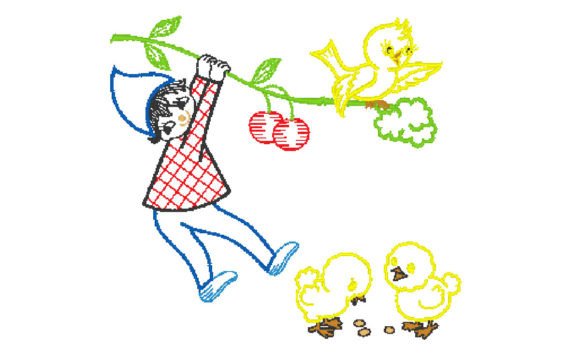
The title Boy and Little Chicks immediately signals warmth, innocence, and gentle storytelling—ideal for businesses that lean into authenticity and care: think bakeries with hand-painted signs, indie toy shops, children’s boutiques, or nature-forward pet brands. It reads as handmade product without feeling overly rustic or childish. There’s no loud graphic energy here—no sharp angles or aggressive contrast—so it avoids clashing with mature branding. Instead, it offers quiet charm: soft curves, balanced proportions, and implied movement (those little chicks suggest life, growth, and attention to detail). For small business merch, that tone builds instant trust and approachability.
Where Boy and Little Chicks Shines in Real Commercial Use
This design excels where many embroidery files falter: versatility across scale and surface. As an embroidered patch, it holds integrity at 2.5”–3.5” sizes—ideal for sew-on labels on tote bags, boutique packaging, or apron pockets. On staff uniforms, it works beautifully as a left-chest accent (not too large, not too small), especially when paired with subtle monogramming or a minimalist business name. We’ve used it successfully on cotton twill caps—centered on the front panel—with excellent stitch definition and minimal puckering.
- Apron embroidery: Its moderate stitch density prevents stiffness while retaining clarity on medium-weight denim or canvas.
- Tote bag design: Looks intentional and elevated—not “cute overload”—when stitched near the bottom hem or on a side pocket.
- Cap embroidery: Maintains legibility even with gentle curve compensation applied during digitizing.
- Product packaging accents: Works well on fabric tags, linen gift wraps, or reusable produce bags for farm-to-table or artisanal brands.
- Etsy branding: Fits seamlessly into printable mockups for digital listings—its clean silhouette renders crisply in both color and grayscale previews.
Where to Use Boy and Little Chicks with Intentional Care
Like any thoughtful machine embroidery design, Boy and Little Chicks has boundaries—and recognizing them is key to professional results. Avoid using it below 2” tall unless you’ve verified the file’s small-size performance: fine chick details and delicate outlines may blur or vanish on tiny patches or curved cap fronts without proper underlay and reduced stitch count. On dark uniforms (navy, charcoal, black), confirm thread color contrast—light pastels or ecru may lack visibility without a white underlay or darker thread selection. Also test it on highly textured fabrics (like bouclé or heavy burlap) and high-wear items (like work shirts or daily-use aprons): excessive stitch density can compromise durability if stabilizer choice or tension isn’t dialed in.
How It Shapes Brand Identity and Customer Perception
Small business owners often underestimate how much a single embroidered element influences perceived value. A well-executed Boy and Little Chicks on a café apron doesn’t just say “we serve coffee”—it says “we care about craft, continuity, and human connection.” That emotional resonance strengthens brand identity across touchpoints: customers remember the gentle motif on your tote bag, then recognize it again on your staff’s cap or your product label. It creates visual consistency without repetition fatigue—because it’s expressive, not generic. For Etsy sellers and handmade brands, it adds tactile authenticity to digital listings; for local businesses, it elevates everyday items into memorable keepsakes. That builds recognition, encourages repeat engagement, and subtly communicates professionalism—even when the design itself feels softly playful.
Practical Designer Notes Before You Digitize or Stitch
Before launching Boy and Little Chicks into production, run these checks—every time:
- Test in black and white first. Print a grayscale version to assess value contrast and silhouette strength—this reveals hidden density issues or lost detail.
- Verify small-patch viability. Resize to your smallest intended use (e.g., 2” wide) and zoom in: do chick shapes remain distinct? Are outlines crisp, not fuzzy?
- Review thread color pairings. Try warm neutrals (oatmeal, slate, olive) and soft primaries (dusty blue, terracotta)—avoid high-contrast combos unless your brand demands boldness.
- Inspect spacing and underlay. Look for tight corners or overlapping elements that could cause thread breaks or skipped stitches on dense fabric.
- Confirm hoop size compatibility. Does the design fit comfortably within your most-used hoops? Oversized files increase setup time and risk misalignment.
- Test on real fabric. Run a sample on your actual garment or patch material—not just stabilizer swatches—to assess drape, texture interaction, and wash resilience.
- Use appropriate stabilizer. Medium-weight cutaway works best for stretchy or unstable fabrics; tear-away suffices for stable cottons and linens.
- Create a client-approved mockup. Embed the design into a realistic photo of your tote, cap, or apron—this prevents costly rework and builds confidence pre-production.
- Compare alongside other design assets. Does Boy and Little Chicks harmonize with your logo, typography, and secondary patterns—or does it compete?
- Confirm commercial licensing. Since this is a digital embroidery file intended for commercial embroidery, verify usage rights cover resale, branding, and small batch production before ordering or deploying.
Ultimately, Boy and Little Chicks isn’t just a charming motif—it’s a flexible, emotionally intelligent tool for small business merch. When used intentionally, it supports authenticity, reinforces values, and turns functional items into meaningful brand expressions. Whether you’re stitching custom apparel for a local florist or designing embroidered patches for a children’s clothing line, this design earns its place in your active design assets—not as decoration, but as deliberate brand language.