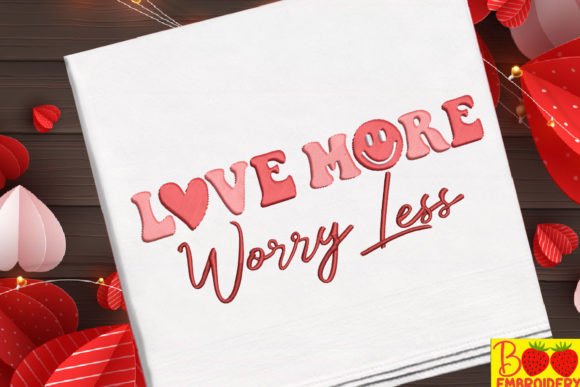
Love More Worry Less
First Impression: Warm, Uplifting, and Instantly Relatable
As an embroidery designer who’s prepped over 200 craft fair booths—from snowy winter markets to sun-drenched summer fairs—I opened Love More Worry Less expecting charm, but what struck me first was its quiet confidence. It doesn’t shout “Valentine’s Day!” with hearts and cupids—it leans into emotional resonance. That makes it feel modern, soft, and deeply human—not just festive, but meaningful. For handmade sellers, that distinction matters. Customers don’t just buy a machine embroidery design; they buy the feeling it carries. And Love More Worry Less delivers calm intentionality in three simple words.
Where It Shines on Craft Fair Products
This design isn’t one-note—it flexes beautifully across product categories, which is rare for a text-based embroidery file. On a natural canvas tote bag? It reads clearly at 4.5” wide—bold enough to catch eyes from six feet away, yet refined enough to avoid looking like a slogan tee. On a linen apron? Positioned above the pocket or centered on the bib, it adds quiet sophistication without competing with functional details. For tea towel embroidery, I recommend placing it low on the hem—its clean lettering holds up even on textured terry cloth, especially when stitched with high-contrast thread colors (think charcoal gray on oatmeal linen).
As an embroidered patch, Love More Worry Less becomes instantly giftable—sew it onto denim jackets, backpacks, or market bags for repeat buyers who love collectible accents. On structured caps, keep it small (≤3”) and center it on the front panel: the letter spacing and moderate stroke weight prevent crowding on curved surfaces. For fabric pouches and pillow covers, it works best as a single focal point—no extra flourishes needed. Its strength lies in restraint.
Real Booth & Online Performance
In person, Love More Worry Less stands out because it feels intentional—not trendy, not fleeting. At a crowded craft fair, where glitter, florals, and oversized hearts dominate, this design breathes. It draws thoughtful customers: teachers, therapists, yoga instructors, small shop owners—the kind who buy handmade products not just for aesthetics, but for alignment. On your booth display, pair it with neutral-toned samples (unbleached cotton, stonewashed denim, undyed linen) and let the message do the talking.
For Etsy sellers and digital embroidery file shops, Love More Worry Less photographs exceptionally well. Its balanced letterforms render crisply in printable mockups—even on dark fabric swatches, provided you use bright white or cream thread. That versatility means fewer listing variants needed: one clean photo of it on a tea towel, one on a tote, one as a standalone patch, and you’ve covered major buyer intents. As a small shop product, it also supports brand consistency: if your line centers on mindful living or slow-made goods, this design reinforces your voice without needing explanation.
Production Practicality: What You Need to Know Before Hooping
This isn’t a “stitch-and-go” design—but it’s not finicky either. As a working embroidery designer, I always ask: Can I produce 25 units before lunch without rethreading or rehooping? With Love More Worry Less, the answer is yes—if you plan ahead. The stitch density is moderate: no dense satin fills or micro-details that snag on textured towels or thick canvas. That said, avoid shrinking it below 2.75” width. Tiny lettering loses legibility fast—especially on dark fabric or uneven surfaces like curved cap fronts.
Watch spacing between “More” and “Worry”—it’s intentionally open, but too much stabilizer shift can widen gaps unnaturally. Use medium-weight cutaway stabilizer for knits and lightweight tear-away for stable wovens. Always test the embroidery file on scrap fabric matching your production batch: thread contrast changes dramatically on heather gray vs. solid black, and fabric texture affects how crisp the edges appear. If you’re embroidering on terry cloth towels, go up one needle size and reduce top tension slightly—those loops love to swallow delicate letterforms.
Smart Selling Notes for Creative Entrepreneurs
- Test before you commit: Run one full sample on each fabric type you plan to sell—tote, apron, towel, patch backing—to confirm readability and drape.
- Review hoop size compatibility: Most versions of this machine embroidery design fit standard 4×4 hoops, but verify before cutting production runs.
- Confirm commercial licensing: Since this is positioned as a craft fair product and handmade product, ensure your embroidery file includes commercial use rights—especially if selling finished goods on Etsy or at markets.
- Create at least one real mockup: A photo of Love More Worry Less stitched on an actual tea towel beats ten digital renderings for building buyer trust.
- Compare thread colors across fabrics: What reads warm and inviting on oatmeal linen may look washed out on ivory cotton poplin—swatch first.
Why This Design Builds Customer Connection
At its core, Love More Worry Less works because it’s emotionally intelligent design—not just technically sound embroidery. It invites conversation (“Is that your motto?” “I need that on my coffee mug”). It fits seamlessly into curated gift sets: pair it with lavender sachets, soy candles, or handwritten notes for a “self-care bundle” that sells itself. For boutique makers and creative entrepreneurs, it’s a low-risk, high-reward addition—no seasonal expiration date beyond Valentine S Day, yet perfectly timed for February gifting, Galentine’s, or even “just because” kindness.
In a market flooded with noise, Love More Worry Less offers clarity. Not just in its letterforms—but in its purpose. It reminds us why we choose handmade: to slow down, to mean something, to make things that matter. Whether stitched on a market bag or offered as a digital embroidery file, it carries weight. And in the hands of thoughtful sellers, that weight becomes value—felt by every customer who pauses, smiles, and says, “Yes. That’s exactly how I want to live.”