Green Flower Border
A Thoughtful First Impression for Boutique Apparel Designers
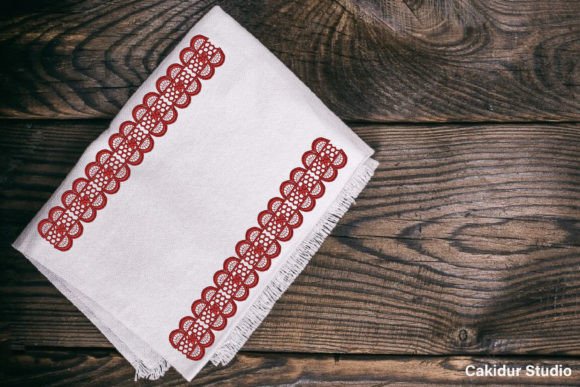
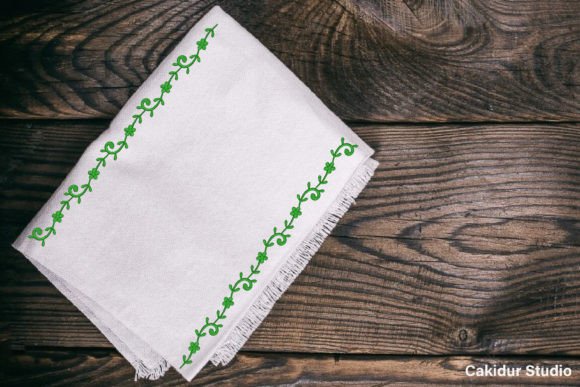
As someone who’s digitized and stitched over 300 floral motifs for small clothing brands, my eye lands instantly on the Green Flower Border — not just as another border, but as a quiet statement of intention. It reads feminine without being fussy, playful without leaning into cartoonishness, and botanical without feeling overly literal. The visual personality is soft yet confident: a gentle rhythm of layered petals and curling stems, balanced with open negative space that breathes across fabric. Stitch density feels intentional — dense enough to hold shape on knitwear, but airy enough to avoid stiffness on lightweight cotton or fleece. It doesn’t scream “trendy”; it leans classic with a contemporary lightness — the kind of embroidery that looks equally at home on a linen tote and a charcoal hoodie.
How Green Flower Border Performs Across Real Apparel Projects
When planning a capsule sweatshirt collection — think unisex oversized hoodies in oat, sage, and deep navy — I immediately pictured Green Flower Border as a chest accent. Its curved flow works beautifully along the natural contour of a hoodie’s front panel, especially when placed just below the neckline. On neutral sweatshirts, it adds dimension without competing; on pastel hoodies (like blush or mint), it brings grounded warmth. For dark apparel, I’d pair it with high-contrast thread — olive green over black, or cream over charcoal — letting the design pop without glare.
It shines as a sleeve accent too: wrapped subtly around the cuff of a ribbed sweatshirt or echoed on both sleeves of a denim jacket. Because it’s designed as a border, it scales gracefully — no distortion when resized within reasonable limits. On t-shirts, I’d use it as a back neckline trim or a subtle hem border on cropped styles. For tote bags and lifestyle merchandise, its repeating rhythm makes it ideal for framing quotes or logos in printable mockups — giving Etsy sellers clean, cohesive visuals without needing custom layout work.
Where to Place It — and Where to Pause
Green Flower Border excels in stable, flat zones: chest placement, straight hems, tote bag edges, and back yokes. But it demands thoughtful handling on stretchy fabric — like French terry or lightweight knits — where excessive stitch density can pucker or distort. Always test on scrap fabric first, using your exact stabilizer combo (cutaway for knits, tear-away for stable wovens). On ribbed fabric, avoid placing it directly over vertical ribs — the texture interrupts stitch continuity. Curved surfaces (like shoulder seams or rounded pockets) require careful hooping and possibly slight manual adjustment during stitching.
Because it’s a floral border — not a monogram or script — tiny lettering isn’t part of the design, so no concerns there. But if you’re pairing it with text elsewhere on the garment, keep spacing generous. This isn’t a filler motif; it holds presence. Use it to anchor, not decorate.
Why It Elevates Your Boutique Brand Identity
In a sea of generic embroidery files, Green Flower Border quietly reinforces brand trust. Its refined execution signals care — not just in stitching, but in curation. When customers see this detail on a handmade product, they register craftsmanship before they read your shop description. For small shop owners and Etsy sellers, that translates directly to perceived value: a $48 hoodie with this border feels more intentional than one with a stock swirl. Visually, it builds consistency across product lines — imagine it appearing identically on sweatshirts, totes, and seasonal scarves. That repetition becomes part of your visual language, strengthening recognition without needing a logo lockup.
On social media graphics and lifestyle product photos, Green Flower Border adds organic texture that photographs beautifully — no harsh shadows, no metallic glint. It layers well with natural lighting and muted backdrops, making your digital embroidery file translate seamlessly into real-world appeal.
Practical Notes Every Embroidery Designer Should Check
- Test before production: Stitch Green Flower Border on scrap fabric matching your final garment’s weight, stretch, and finish.
- Stabilizer matters: Cutaway is safest for fleece and knits; medium-weight tear-away works for stable cottons and denims.
- Thread color contrast: Green-on-green reads softly — consider tonal variation (e.g., forest over moss) or contrast (cream over navy) depending on your boutique brand palette.
- Hoop size & placement: Confirm the Creative Fabrica embroidery file’s recommended hoop size — borders often require larger hoops for smooth tension. Measure your intended placement area before hooping.
- Inspect stitch density: Zoom in on the file preview — look for overlapping satin stitches or tight fill areas that may snag on brushed fabrics like fleece.
- Compare placement options: Try it centered, left-aligned, or wrapping gently around a corner — borders gain strength from context, not just form.
- Review licensing: Before selling finished apparel, confirm the Creative Fabrica embroidery license permits commercial use for physical products — especially important for Etsy sellers and small clothing brands.
Final Thoughts for the Intentional Embroiderer
Green Flower Border isn’t flashy — and that’s its strength. In an era where handmade product buyers crave authenticity over excess, this machine embroidery design delivers quiet confidence. It supports your vision rather than shouting over it. Whether you’re building a seasonal capsule, launching a new boutique brand, or refining your Etsy seller aesthetic, it’s a versatile, wearable piece of botanical storytelling. Used thoughtfully — with attention to fabric, stabilizer, and placement — it transforms simple apparel into something memorable. Not just stitched, but considered.