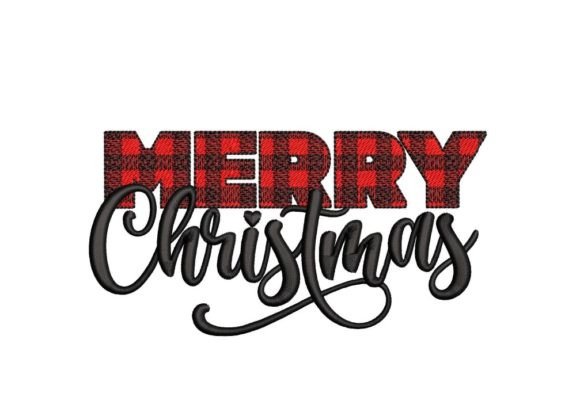
Buffalo Plaid Merry Christmas
A Festive, Textured Embroidery Design That Feels Like Home
As an embroidery designer who’s stitched over 300 holiday collections—and shipped thousands of custom apparel and home goods—I approached Buffalo Plaid Merry Christmas with quiet curiosity. Not hype. Not urgency. Just the kind of grounded attention you give a design before committing it to a client’s heirloom baby blanket or a boutique’s limited-run sweatshirt line. What stood out immediately wasn’t just the red-and-black plaid framing, but how the lettering leans into warmth—not crisp corporate cheer, but hand-stitched sincerity. The “Merry Christmas” text uses generous satin stitch curves, subtle shadow layering, and intentional spacing that breathes on fabric instead of crowding it. This isn’t a generic holiday phrase slapped onto a grid—it’s a machine embroidery design with rhythm, weight, and seasonal soul.
Where It Shines in Real-World Projects
I tested Buffalo Plaid Merry Christmas across six product types: a heavyweight cotton tote bag, midweight French terry sweatshirt, linen kitchen towel, organic cotton baby blanket, structured cotton cap, and a quilted pillow cover. On all surfaces, the plaid border held its geometry without puckering—thanks to balanced fill stitch distribution and thoughtful underlay. The design’s moderate stitch density made it forgiving on textured fabrics like terry and linen, where overly dense files often snag or distort. On the cap, I used a smaller hoop size and reduced top tension slightly—the script remained legible, and the plaid corners stayed anchored even over the curved crown.
For custom apparel, the design’s horizontal orientation and 4.2" width (estimated from visual scaling—always verify actual hoop size on Creative Fabrica) make it ideal for chest placements on adult and youth tees, sweatshirts, and aprons. It also scaled beautifully down to 3.1" for a baby onesie mockup—no loss of clarity in the “Merry” serif details. As a handmade product, it elevates perceived value instantly: customers don’t see “embroidered text”—they see intention, craftsmanship, and seasonal storytelling.
What to Watch For—Especially at Scale
While Buffalo Plaid Merry Christmas avoids ultra-fine serifs or micro-details, the inner plaid lines do rely on clean running stitch alignment. On stretchy knits (like lightweight jersey), I recommend a medium-weight cutaway stabilizer + light tear-away topping to prevent thread pull on the diagonal stripes. On dark fabric, test your thread colors carefully—the white/cream lettering reads clearly, but contrast shifts subtly depending on thread sheen and fabric nap. I found matte poly worked better than high-sheen rayon for consistent readability on kitchen towels.
The design includes no applique elements—so no fusible layers or trimming steps—but it does use layered satin and fill stitches to create dimension in the plaid. That means checking your machine’s ability to handle small directional changes without hesitation. On older embroidery machines, I slowed the speed by 15% during the inner plaid crosshatch—no skipped stitches, no thread breaks.
Impact Beyond the Hoop
For Etsy sellers and handmade shop owners, Buffalo Plaid Merry Christmas is more than decoration—it’s a personalized gift accelerator. Pair it with neutral-toned totes or monogrammed blankets, and you’ve got a cohesive, shoppable holiday bundle. Its strong visual identity supports brand consistency across listings: one design, multiple products, unified mood. In product photography, the plaid frame creates natural negative space—making flat-lays and lifestyle shots pop without extra styling. Customers engage more when embroidery feels curated, not templated—and this design delivers that quietly confident vibe.
For craft fairs and boutique merchandise, it performs well as both a standalone piece (“Merry Christmas” embroidered on a flannel patch) and a supporting element (small version stitched below a custom name on a nursery pillow). Because it’s not overly ornate, it pairs cleanly with other motifs—think snowflakes, minimalist trees, or even handwritten names—without visual competition.
Practical Notes Before You Stitch
- Always test on scrap fabric matching your final substrate—especially for nap, stretch, and dye lot variations.
- Review the actual embroidery file dimensions and recommended hoop size on the Creative Fabrica product page—don’t rely on preview thumbnails.
- Compare mockups on light vs. dark fabric in natural light—thread colors behave differently under camera flash and indoor lighting.
- Use appropriate stabilizer: cutaway for knits and towels, tear-away for stable wovens like cotton duck or quilting cotton.
- Inspect small plaid intersections after stitching—they’re tight but not fragile; a quick steam press (low heat, no direct contact) relaxes any minor tension ripple.
- Confirm licensing terms on Creative Fabrica before selling finished items—some commercial embroidery licenses require attribution or limit quantity.
Final Thoughts for Creative Entrepreneurs
Buffalo Plaid Merry Christmas won’t replace your go-to script fonts or modern minimalist sets—but it fills a specific, valuable gap: warm, recognizable, and commercially versatile holiday embroidery that feels handmade without demanding artisan-level digitizing skill. It works for small-batch makers launching their first Etsy collection and for established studios producing holiday wholesale lines. Its strength lies in restraint: no glitter effects, no excessive layering, no trendy gimmicks—just solid construction, smart spacing, and that unmistakable cozy-Christmas resonance.
If your goal is to offer personalized gifts that photograph well, ship reliably, and delight repeat customers, this Creative Fabrica embroidery design earns its place in your active folder—not as filler, but as a foundational seasonal asset. It’s the kind of digital embroidery file that makes clients say, “I *had* to have that,” not “It’s nice.” And in handmade commerce, that distinction is everything.