Major American Font 0 to 9
A Practical Review for Small Business Embroidery Projects
As an embroidery designer who’s developed branded patches and custom apparel for over 12 years—from neighborhood bakeries to indie florists and Etsy craft studios—I approached Major American Font 0 to 9 with a very specific question: Can this machine embroidery design deliver clean, confident, and commercially viable results across real small business merchandise? Not just as a decorative element—but as part of a cohesive brand identity on aprons, caps, tote bags, staff uniforms, and product packaging accents.
First Impression: Bold, Clear, and Built for Recognition
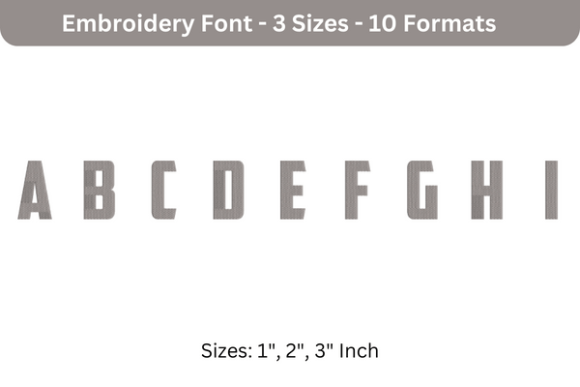
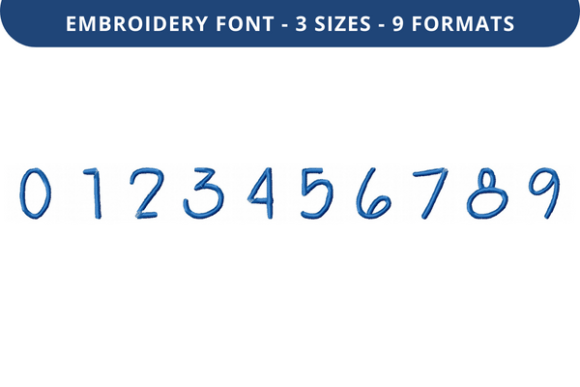
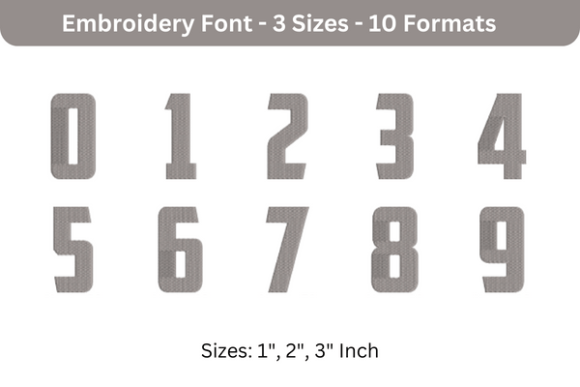
The name Major American Font 0 to 9 signals something instantly legible, grounded, and trustworthy—less ornamental, more functional. Based on the description (“a high-quality embroidery font that will help you personalize your designs”), it reads as a no-nonsense, all-caps numeric set designed for clarity at scale. It doesn’t promise whimsy or script elegance—it promises readability, consistency, and professional presence. That makes it ideal for businesses where numbers matter: café order numbers, boutique batch codes, pet brand age tags, florist delivery dates, or bakery “Est. 2023” labels.
Where Major American Font 0 to 9 Shines in Real Business Use
This embroidery file excels where precision and instant recognition are non-negotiable:
- Embroidered patches—especially 1.5"–3" chest or sleeve patches for staff uniforms, where clean numerals reinforce credibility (e.g., “#07” for barista shift badges or “2024” on limited-edition tote bags).
- Cap embroidery—front panels benefit from strong, upright numerals that hold shape without distortion, even on curved crowns.
- Apron embroidery—whether stitched on a pocket or hem, Major American Font 0 to 9 adds subtle authority to handmade product branding (think “Batch #12” on a ceramic studio apron).
- Tote bag design—small runs of branded totes for local events or pop-ups gain polish with crisp, scalable numerals beside a logo or tagline.
- Back To School merch—schools, tutors, and after-school programs use it confidently for grade-level markers (“Grade 3”), classroom numbers, or student ID-style accents on backpacks and lanyards.
- Product packaging accents—stitched onto fabric gift tags, linen pouches, or reusable produce bags, it elevates perceived value without overwhelming handmade aesthetics.
Use With Care: Practical Limits for Commercial Embroidery
Even strong fonts have boundaries—and respecting them protects your reputation and your client’s investment. Here’s where to proceed thoughtfully with Major American Font 0 to 9:
- Small patch sizes under 1": Test stitch-out first. Tight spacing or thick outlines may blur or “fill in” at tiny scales.
- Curved surfaces (like cap fronts or rounded tote handles): Confirm digitizing allows for smooth contour adaptation—some fonts stretch or skew unnaturally.
- Textured fabric (burlap, heavy canvas, terry cloth): High stitch density can cause puckering. Pair with cutaway stabilizer and reduce density if needed.
- Dark uniforms or black totes: Thread color contrast is critical. White or bright neon thread pops—but always test against actual fabric, not just screen mockups.
- Frequent washing: Ensure the embroidery file uses secure underlay and satin-stitch integrity—no floating elements or thin stems that fray over time.
How It Strengthens Brand Identity and Customer Trust
Numbers aren’t neutral—they’re silent brand ambassadors. A café using Major American Font 0 to 9 for “Order #42” on staff aprons communicates efficiency and consistency. A florist stitching “2024 Bloom Collection” on reusable gift totes implies craftsmanship and seasonality. That kind of visual reliability builds customer trust faster than any slogan.
For Etsy sellers and handmade brands, Major American Font 0 to 9 supports authenticity—not by hiding behind cursive flair, but by anchoring the brand in clarity and intention. It works seamlessly alongside hand-drawn logos or minimalist wordmarks, offering balance between personality and professionalism. And because it’s a dedicated numeric set—not a full alphabet—it encourages focused, intentional use: no filler text, no visual noise, just purpose-built branding.
Pro Designer Notes Before You Stitch
Before committing to production—or sending files to your embroidery partner—here’s what I always do with new digital embroidery files like Major American Font 0 to 9:
- Test it in black and white first—eliminates color bias and highlights spacing, kerning, and stroke weight.
- Check how it renders at your smallest intended patch size (e.g., 1.25")—not just on screen, but stitched on scrap fabric.
- Review thread color contrast on your target fabric—especially for dark or busy textures.
- Inspect letter spacing and baseline alignment—critical when combining with other design assets.
- Confirm hoop size compatibility—some numeric fonts require larger hoops for optimal tension and stability.
- Test on your actual fabric + stabilizer combo—don’t skip this step, even for “standard” cotton twill or denim.
- Create a printable mockup for client approval—include real-world context (e.g., cap front, apron pocket) so stakeholders visualize usage.
- Compare it beside your existing logo, icons, or typography—does it support visual consistency, or clash silently?
- Verify commercial licensing—this is essential for small business merch, Etsy listings, and wholesale apparel. Never assume personal-use rights cover resale.
Remember: Major American Font 0 to 9 isn’t just a machine embroidery design—it’s a tool for reinforcing your brand’s voice, values, and visibility. Used intentionally, it turns simple numbers into quiet signatures of quality. Whether you're stitching for a local pet brand’s collar tags or designing limited-run merch for a creative studio’s grand opening, this embroidery file earns its place in your design assets—not as decoration, but as dependable, professional infrastructure.