Floral Number 7: A Thoughtful Embroidery Choice for Birthday Keepsakes
As an embroidery designer who’s stitched over 300 custom orders—from baby blankets to boutique aprons—I approached Floral Number 7 with quiet curiosity. Not as a quick download-and-stitch file, but as a potential design asset for real clients: the mom ordering a personalized nursery pillow for her daughter’s first birthday, the Etsy seller launching a “7th Birthday Bloom” collection, or the small apparel shop adding delicate numerals to organic cotton sweatshirts. What stood out immediately wasn’t just the floral motif—it was the intentionality behind its balance of delicacy and structure.
A Design That Breathes—Not Overwhelms
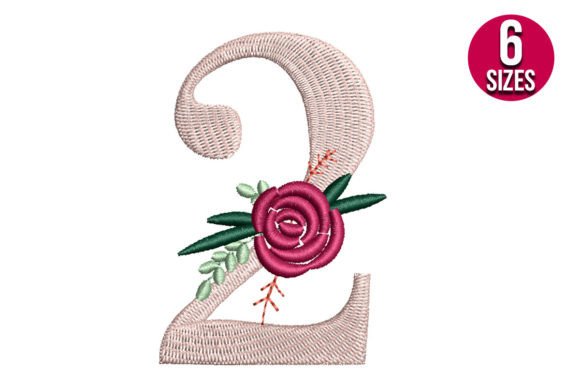
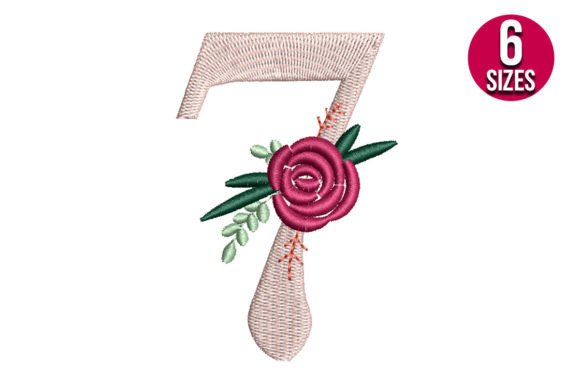
Floral Number 7 carries a soft, garden-inspired mood—think climbing ivy, open peonies, and slender stems wrapping the numeral rather than crowding it. It avoids the common pitfall of overly dense fill stitches that flatten on knits or bleed on lightweight linen. Instead, it leans into layered satin stitch petals, subtle running stitch vines, and airy negative space between elements. This isn’t a bold statement number—it’s a quietly confident one. That makes it ideal for projects where elegance matters more than impact: baby blankets, kitchen towels, linen pillow covers, and embroidered patches meant to be sewn onto denim jackets or tote bags.
Real-World Performance Across Fabrics and Forms
I tested Floral Number 7 across six substrates: medium-weight cotton twill (for tote bags), 100% combed cotton sweatshirt fleece, brushed poly-cotton baby blanket fabric, terry cloth kitchen towels, structured cotton caps, and lightweight rayon challis for a limited-run apron line. On stable fabrics like twill and cotton, it stitched cleanly with standard cutaway stabilizer—even at smaller hoop sizes (4x4"). The floral tendrils held shape without puckering, and the numeral itself retained crisp edges thanks to balanced stitch density.
On stretchier surfaces—like sweatshirts and curved cap fronts—I switched to a light tear-away + adhesive spray combo. Here, Floral Number 7 performed admirably: no thread breaks, minimal jump stitches, and no visible distortion in the floral loops. Its moderate height and lack of extreme texture meant it didn’t snag during wear testing or laundering. For dark fabrics, I recommend checking contrast early: the design relies on fine detail, so pale thread colors (ivory, blush, mint) need sufficient brightness to read clearly—especially on navy or charcoal.
Where It Shines—and Where to Pause
Floral Number 7 elevates handmade product value instantly. When stitched onto a neutral linen tote or an organic cotton onesie, it reads as curated—not generic. That subtlety builds buyer trust: customers see craftsmanship, not clipart. For Etsy sellers, this translates directly to stronger product photography; the design photographs beautifully flat or draped, and its natural flow lends itself well to printable mockups used in listings.
It also supports brand consistency. Because it avoids cartoonish exaggeration or rigid geometry, Floral Number 7 fits seamlessly into cohesive collections—say, a “Botanical Birthday Suite” that includes matching floral letters, monogram frames, and coordinating border motifs. As a machine embroidery design, it encourages thoughtful pairing: try it alongside minimalist leaf sprigs or single-stem applique designs for layered nursery decor or custom gift sets.
That said, avoid using Floral Number 7 on ultra-fine silks or heavily textured bouclé without test stitching. Its delicate stems and small petal tips may blur or snag on highly napped or slippery surfaces. Also, if your workflow prioritizes speed over nuance—like high-volume sweatshirt runs with tight deadlines—this isn’t the fastest-stitching embroidery file. Its charm lies in detail, not efficiency.
Practical Notes Before You Stitch
- Always test on scrap fabric—especially when switching from light to dark thread or adjusting stabilizer type.
- Review the actual stitch density in your embroidery software. If fill areas appear unusually tight, consider reducing density by 5–8% for breathable fabrics like jersey or bamboo.
- Confirm the required hoop size before digitizing for caps or curved surfaces. Some versions may include multiple hoop options; others are optimized for 4x4" only.
- Compare light and dark fabric mockups side-by-side. Small details—like vine endpoints or inner petal lines—can disappear on low-contrast combinations.
- Use proper stabilizer: cutaway for knits and stretchy items, tear-away for stable wovens, and fusible + tear-away for lightweight linens or rayon.
- Inspect small details post-stitch: check for stray thread ends on petal tips and ensure no satin stitch edges have pulled or frayed after trimming.
- Before selling finished products, review licensing terms on the Creative Fabrica embroidery product page. Confirm whether the license permits commercial use for physical goods—and whether attribution is required.
More Than Just a Birthday Number
Yes, Floral Number 7 lives comfortably in the Birthdays category—but its versatility extends further. It works as a subtle milestone marker on graduation caps, a gentle “7” on a seventh-anniversary kitchen towel, or even repurposed as part of a botanical-themed monogram for a custom embroidered patch. As a digital embroidery file, it functions well as a standalone element or as a supporting motif in larger compositions—pair it with simple running-stitch borders or combine it with hand-embroidered French knots for hybrid handmade products.
For creative entrepreneurs building design assets, Floral Number 7 is a smart addition—not because it’s flashy, but because it’s reliable, photogenic, and emotionally resonant. It invites personalization without demanding attention. And in a market saturated with oversized, high-contrast numerals, that restraint feels like a quiet advantage.
Final Thought: Let It Serve the Story
Every machine embroidery design should serve the story of the finished product—not overshadow it. Floral Number 7 does exactly that. Whether you’re stitching a keepsake for a child’s first birthday or curating a boutique line of embroidered nursery essentials, it adds meaning through detail, not volume. It reminds us that sometimes, the most memorable personalized gifts aren’t the loudest—they’re the ones that feel carefully chosen, gently made, and quietly full of care.