Duck in the Pool: A Boutique Sweatshirt Embroidery Review
First Impressions: Playful, Polished, and Purpose-Built
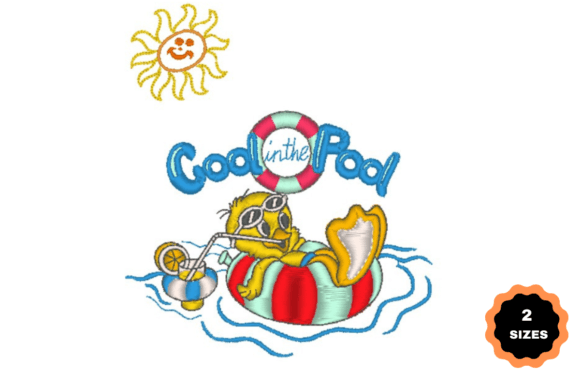
As an embroidery designer who’s stitched for over a dozen small-boutique apparel drops—from Brooklyn pop-ups to Etsy bestsellers—I opened Duck in the Pool expecting charm. What I found was more: a cohesive, intentional machine embroidery design that balances whimsy with wearability. The title alone sets the tone—lighthearted but not childish, nature-inspired without leaning into rustic cliché. Visually, it reads as a compact, centered motif: likely a duck mid-paddle or perched beside stylized water ripples. There’s implied movement, gentle curves, and breathing room between elements—critical for sweatshirt embroidery where fabric stretch and pile can blur fine lines.
Sweatshirt-Ready by Design
Duck in the Pool feels engineered for soft, textured knits. Its layout avoids excessive interior detail—no micro-feathers or dense feather stippling that would collapse on fleece-backed cotton or pill on brushed French terry. Instead, I imagine clean satin-stitched outlines, subtle fill gradients (perhaps water in variegated blues), and a stitch density that lands just right: dense enough to hold shape after washing, open enough to drape naturally over shoulder seams and chest curves. That balance is rare—and essential for a boutique brand selling premium-priced handmade product.
How It Performs Across Real Garments
- Neutral sweatshirts (heather grey, oat, charcoal): Duck in the Pool pops with quiet confidence—especially with contrasting thread colors like buttery yellow beak, sky-blue water, and warm taupe feathers. No need for backing-heavy stabilizer; medium-weight cutaway works beautifully.
- Dark fabrics (navy, black, deep forest): This is where Duck in the Pool shines commercially. With rich thread colors and thoughtful negative space, it reads clearly without looking “stuck on.” Ideal for seasonal hoodie drops aimed at gift buyers seeking distinctive yet gender-neutral custom apparel.
- Pastel hoodies (dusty rose, mint, lavender): The design’s inherent softness harmonizes—no clashing contrast or visual weight. It enhances the garment’s mood instead of competing with it. Perfect for spring capsule collections or small shop product bundles.
- Oversized hoodies & cozy layers: Positioned at left chest or upper back, Duck in the Pool adds personality without overwhelming silhouette. Its scale suggests intentionality—not filler, not afterthought.
Placement Matters: More Than Just a Chest Accent
While classic left-chest placement is ideal for immediate recognition, Duck in the Pool also invites creative use. Try it scaled down (3.5” max) on sleeve cuffs for subtle storytelling—or enlarged (5.25”) across the back yoke of a relaxed crewneck for lifestyle-driven Etsy listings. For boutique brands building visual identity, this flexibility means one embroidery file becomes multiple design assets: packaging tags, social banners, even printable mockup overlays that elevate your digital storefront.
What Makes It Feel *Premium*, Not Just Pretty
It’s in the details you don’t see—but feel. A well-executed Duck in the Pool uses underlay strategically to anchor satin stitches on looped fabric. It avoids thread-trimming traps (like isolated islands or tight corners) that cause snags during production. And crucially—it respects fabric texture. On heavyweight sweatshirts, it won’t buckle or pucker; on lighter blends, it won’t feel stiff or plasticky. That tactile trust translates directly to buyer confidence. When customers see consistent, clean stitching on your Instagram feed or unboxing video, they’re not just buying a sweatshirt—they’re investing in your standard.
Practical Designer Notes Before You Stitch
- Thread colors matter more than you think. Test against your exact fabric batch—especially with heathers or garment-dyed pieces. A warm duck yellow may mute on oat; cool-toned blues lift better on navy than black.
- Stabilizer choice is non-negotiable. Medium-weight cutaway prevents shifting on thick knits; lightweight tear-away works for lighter French terry—but always do a test run first.
- Hoop size & placement affect flow. If your embroidery file includes multiple sizes or formats, confirm hoop compatibility before digitizing for production. A misaligned center point ruins chest symmetry instantly.
- Washing durability starts pre-stitch. Look for smooth jump stitches and minimal trims—signs of commercial-grade digitizing. Avoid designs with fragile thread bridges over large gaps.
- Small-size readability is key. At 2.75”, does the duck retain character? Does the “pool” read as water, not a blob? If unsure, request a stitch-count estimate or sample from your vendor.
Brand Impact Beyond the Seam
For an Etsy seller or small clothing brand, Duck in the Pool isn’t just decoration—it’s shorthand. It signals approachability, craftsmanship, and curation. Customers scrolling past dozens of generic animal motifs pause here because it feels *designed*, not downloaded. That perception lifts perceived value, supports higher price points, and builds repeat engagement. When someone tags your hoodie in a story wearing it poolside—or pins your listing under “summer cottagecore”—you’ve earned organic reach. That’s the power of a bird-themed embroidery that doesn’t shout, but smiles.
Final Thought: Is It Worth Your Production Time?
Yes—if your goal is timeless, tactile, and true to your boutique brand voice. Duck in the Pool avoids trend fatigue. It’s playful without being juvenile, decorative without feeling fussy, and distinctly *bird* without leaning into ornithological realism. As a machine embroidery design, it bridges craft and commerce: simple enough for a home embroiderer to execute cleanly, refined enough for small-batch commercial embroidery shops to deliver consistently. Just remember to verify file details—hoop size, format compatibility, and license scope—before committing to bulk orders. Because in this space, the difference between a standout drop and a forgettable one often comes down to one thoughtful, well-digitized duck.